Admissions Helpline :7534078714
Stay Connected


Renowned Mycologist and Academic Leader
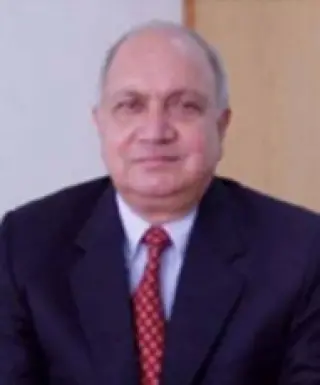
Dr. T.N. Lakhanpal is celebrated for his pioneering contributions to mycology. He earned his B.Sc. Hons and M.Sc. Hons in Botany from Panjab University, Chandigarh, securing top honors and receiving prestigious awards including a Gold Medal. His doctoral research at the University of Delhi under Prof. K.G. Mukerji focused on "Taxa-ecological and Experimental Studies on Myxomycetes," pioneering cultivation methods and life cycle studies. This work laid the groundwork for a seminal monograph on Indian Myxomycetes published in 1982.
Dr. Lakhanpal's academic journey includes distinguished roles at H.P. University, Shimla, where he served as Professor Emeritus, Director of the Institute of Integrated Himalayan Studies, and Dean of the Faculty of Life Sciences. He held various administrative positions such as Chairman of the Department of Bio-Sciences and Dean of Student Welfare. His teaching career spans prestigious institutions like Hans Raj College, Delhi University, and Mizoram University.
A stalwart in mycological research, Dr. Lakhanpal has significantly advanced the understanding of fungal biodiversity, particularly in the Himalayas. His collaborations and research projects, supported by national and international grants, have resulted in numerous publications, including over 190 research papers and several monographs. He has authored and edited multiple books on fungal biodiversity and medicinal plants, contributing extensively to the field's literature.
Dr. Lakhanpal's contributions extend beyond academia. He has served as President of the Mycological Society of India, chaired the PAC of the National Mushroom Research Centre, and advised on various scientific committees. Recognized with prestigious awards such as the Lifetime Achievement Award from the Mycological Society of India and the Sarswati Award from the University of Delhi, Dr. Lakhanpal's legacy in mycology continues to inspire and educate generations of researchers worldwide.
His global influence is underscored by visits to the U.S.A., Japan, England, and Thailand, fostering international collaborations in fungal research and biodiversity conservation.
